bluename
 Organic Fertilizers for Aloe Vera: Top Recommendations for Thriving Plants
You’ve lovingly placed your aloe vera plant on a sunny windowsill, watering it sparingly, yet something seems off. The once-plump, vibrant green leaves are now thin, pale, or perhaps developing unsightly brown spots. You wonder, isn’t aloe supposed to be the unkillable plant? The truth is, even these hardy succulents need proper nutrition to truly thrive, not just survive. While they are low-maintenance, their native, mineral-rich desert soils provide subtle nutrients that our standard potting mixes often lack over time. This is where the right organic fertilizer becomes your secret weapon.
The challenge is navigating the overwhelming world of plant food. Chemical fertilizers can be too harsh, risking root burn and disrupting the delicate soil ecosystem. The solution lies in mimicking nature’s gentle, slow-feeding process. This guide dives deep into the best organic fertilizers for aloe vera, explaining not just what to use, but why and how to use them to promote robust growth, enhance the plant’s medicinal gel quality, and support its overall health sustainably.
Understanding Aloe Vera’s Unique Nutritional Needs
Aloe vera is a succulent adapted to arid environments with lean, well-draining soils. Its fertilizer requirements are fundamentally different from those of leafy vegetables or flowering houseplants.
Contrary to popular belief, aloe vera is not a heavy feeder. Over-fertilization, especially with nitrogen-rich formulas, can be detrimental. It leads to rapid, weak growth, making leaves soft, floppy, and prone to splitting. The iconic compact, sturdy form is lost. The primary goal is to provide a balanced, gentle supplement that supports resilience.
Key nutrients for aloe vera include:
- Nitrogen (N): Important for the green, chlorophyll-rich growth of leaves. However, excess is harmful. A moderate amount supports steady leaf development.
- Phosphorus (P): Crucial for strong root system development and energy transfer within the plant. Healthy roots are the foundation of a healthy aloe.
- Potassium (K): Enhances overall plant vigor, drought tolerance, and disease resistance. It helps regulate the plant’s internal processes and contributes to the quality of the aloe gel.
- Micronutrients: Elements like calcium, magnesium, and sulfur, often found in quality organic blends, play vital roles in cell structure and function.
Why Choose Organic Fertilizers for Your Aloe Plant?
Opting for organic fertilizers aligns perfectly with the natural, health-focused ethos of growing aloe vera. The benefits are substantial for both your plant and the environment.
Gentle, Slow-Release Nutrition Organic fertilizers feed the soil, which in turn feeds the plant. They release nutrients slowly as microorganisms break them down. This provides a steady, consistent nutrient supply without the risk of the sudden salt surges that cause chemical fertilizer burn on aloe’s sensitive roots. It’s a “set it and forget it” approach that matches the plant’s slow growth habit.
Building Soil Health and Structure Beyond just NPK, organic amendments improve the soil itself. They increase the soil’s ability to retain moisture and nutrients while still ensuring excellent drainage—a critical factor for preventing aloe vera root rot. They foster a thriving community of beneficial bacteria and fungi, creating a resilient soil ecosystem. As noted in a review by the Journal of Soil Science and Plant Nutrition, organic matter is fundamental for sustaining soil fertility and biological activity.
Safety for Medicinal Use Many growers harvest aloe vera gel for topical skin applications. Using organic fertilizers minimizes the risk of introducing synthetic chemicals or heavy metal residues into the gel, ensuring a purer end product for personal use.
Top Recommended Organic Fertilizer Types for Aloe Vera
Based on nutrient profile, ease of use, and effectiveness, here are the top categories and specific recommendations.
1. Worm Castings: The All-Round Superfood Worm castings are arguably the perfect organic fertilizer for succulents like aloe vera. They are mild, nutrient-rich, and impossible to over-apply.
- Benefits: They provide a balanced, readily available source of nutrients, along with beneficial microbes and enzymes. They improve soil aeration and water retention. Castings are pH-neutral and will not burn roots.
- How to Use: As a top dressing, gently mix 1/4 to 1/2 cup of castings into the top layer of soil around the plant. This can be done at the start of the growing season (spring) and repeated once in mid-summer. Alternatively, mix castings into your potting soil when repotting (about 1:3 ratio of castings to soil).
2. Compost Tea: A Liquid Boost for Soil Life Compost tea is a liquid extract of compost that delivers nutrients and a massive inoculant of beneficial microorganisms directly to the root zone.
- Benefits: It quickly enhances soil biology, helping plants better access existing nutrients. It can help suppress soil-borne pathogens and gives aloe a noticeable boost in vibrancy.
- How to Use: Use a well-brewed, aerated compost tea. Dilute it until it resembles weak tea. Water your aloe vera with this solution once at the beginning of the growing season and once halfway through. Avoid over-applying.
3. Specific Commercial Organic Blends for Cacti and Succulents Several reputable brands offer balanced, granular, or liquid organic fertilizers for aloe vera plants. These are convenient and formulated specifically for the needs of succulents.
- What to Look For: Choose a blend with a low, balanced NPK ratio, such as 1-1-1 or 2-2-2. Ensure it is derived from organic sources like kelp, bone meal, or alfalfa meal. Dr. Earth’s Succulence Cactus & Succulent Food or Espoma’s Cactus! Liquid Plant Food are examples of trusted products that meet these criteria.
- How to Use: Always follow the label instructions, and often, it’s wise to dilute to half-strength. Apply only during the active growing period (spring and summer), typically once a month at most.
4. Natural Mineral Amendments These supplements address specific micronutrient needs and improve soil texture.
- Kelp Meal or Liquid Seaweed: Packed with micronutrients, vitamins, and natural growth hormones, kelp promotes strong root development and stress resistance. Use as a diluted foliar spray or soil drench 1-2 times per season.
- Bone Meal: A great source of phosphorus and calcium, it supports strong root growth. A small amount can be mixed into the soil during repotting every 2-3 years.
How and When to Fertilize Your Aloe Vera Plant
Applying fertilizer correctly is as important as choosing the right one.
The Golden Rule: Less is More When in doubt, under-fertilize. A weak, diluted application is always safer. You can always add a little more later, but you cannot reverse fertilizer burn.
Ideal Fertilizing Schedule
- Growing Season (Spring & Summer): This is the only time to fertilize. Apply your chosen fertilizer once at the start of spring and optionally once more in mid-summer. That’s often enough for the entire year.
- Dormant Season (Fall & Winter): Do not fertilize. The plant’s growth has slowed or stopped, and feeding it can lead to nutrient buildup and root damage.
Step-by-Step Application Guide
- Water First: Always ensure the soil is lightly moist before applying any fertilizer. Never fertilize a completely dry plant, as this concentrates salts.
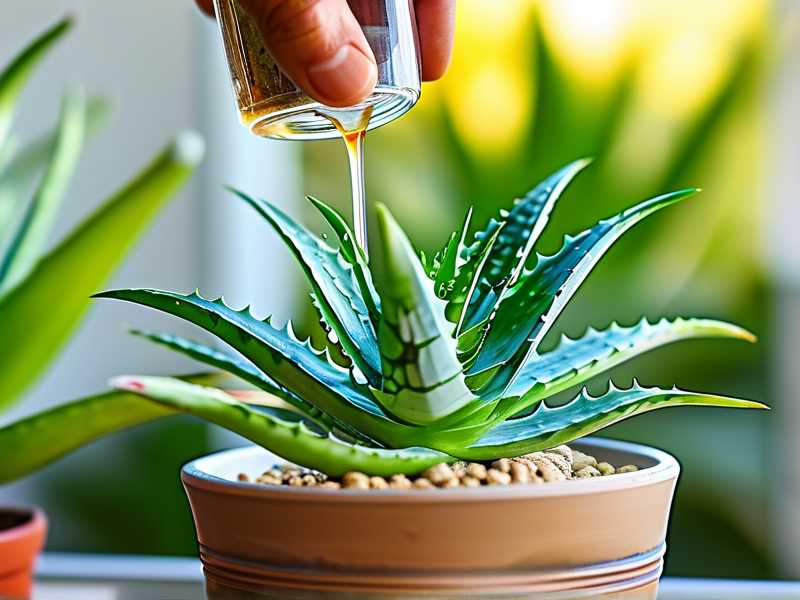
- Apply Diluted Solution: For liquid fertilizers like compost tea or diluted seaweed, apply directly to the soil, not the leaves, until it begins to drain from the bottom.
- Incorporate Granular Forms: For worm castings or granular fertilizers, sprinkle evenly on the soil surface and gently scratch them into the top inch. Follow with a light watering.
- Observe: Watch your plant’s response over the following weeks. Healthy new growth from the center is a good sign.
Common Mistakes to Avoid with Aloe Vera Fertilization
- Over-fertilizing: The number one killer of potted aloe plants. Signs include soft, mushy leaves, brown tips, and stunted growth.
- Fertilizing in Dormancy: This disrupts the plant’s natural cycle and can cause weak, etiolated growth.
- Using High-Nitrogen Formulas: These promote too much soft, watery tissue, making the plant susceptible to pests and physical damage.
- Ignoring Soil Refreshment: Organic matter depletes. Repot your aloe every 2-3 years with fresh, well-draining cactus/succulent mix to reset its nutrient base.
Can I use leftover coffee grounds as fertilizer for my aloe vera? It’s not recommended to use coffee grounds directly. While they are organic, they can compact the soil, hinder drainage, and create a moist, acidic environment that is unsuitable for aloe vera roots. For a safe alternative, add used coffee grounds to your compost bin first, and then use the finished, neutralized compost.
How do I know if my aloe vera needs fertilizer? Signs of nutrient deficiency include very slow or no growth over a season, pale or yellowish leaves (especially newer ones), and leaves that remain thin and don’t plump up even with proper watering. However, always rule out more common issues like overwatering or insufficient light first.
Is it okay to use homemade compost on aloe vera? Yes, well-aged, fully decomposed compost is excellent. It should be crumbly, dark, and smell earthy—not sour. Use it sparingly as a top dressing or mix up to 25% into your potting soil when repotting. Avoid using compost that is still breaking down, as it can generate heat and excess moisture.
Choosing to nourish your aloe vera with organic fertilizers is a commitment to its long-term, holistic health. By selecting gentle options like worm castings, compost tea, or specially formulated blends, and applying them with a restrained hand only during the growing season, you work with the plant’s natural biology. The reward is a strikingly vigorous aloe vera plant—one with thick, richly colored leaves, a robust form, and a heightened ability to produce its prized soothing gel. This approach transforms your aloe from a simple houseplant into a resilient, thriving testament to natural care.