bluename
 Aloe Vera Root Rot: Early Detection Tips That Saved My Plants
There's a special kind of panic that sets in when you notice your once-plump, vibrant aloe vera plant starting to look… wrong. The leaves feel soft, maybe they're browning at the base, and that proud, upright posture is now a sad, slumping lean. I've been there, staring at a plant I thought was indestructible, only to realize it was silently suffering from the most common killer: aloe vera root rot.
Early detection isn't just a tip; it's the only thing that stands between a full recovery and a total loss. Over my years as a plant enthusiast, I've turned my fair share of mushy-base disasters back into thriving succulents. It all comes down to catching the problem early and acting with precision. This guide is the product of my hands-on experience, including a recent, deliberate two-week rescue mission I undertook to document the exact process.
Why Your Aloe Vera is So Vulnerable to Root Rot
Aloe vera is a desert champion, built to store water and thrive on neglect. That's precisely why our well-intentioned care often backfires. We love them a little too much with the watering can. The Royal Horticultural Society (RHS) consistently lists overwatering as the primary cause of houseplant demise, and aloe is a prime target. The roots need to breathe, and soggy soil creates an anaerobic environment where harmful fungi like Pythium and Phytophthora flourish, attacking and rotting the root system.
The Early Warning Signs: Don't Ignore These Clues
Catching aloe vera root rot in its initial stages means looking beyond the obvious. Before the plant collapses, it sends signals.
The Telltale Leaf Texture Change: This is your first clue. A healthy aloe leaf is firm and turgid. The earliest sign of trouble is a subtle softening, starting at the base of the lower leaves. They may lose their plump rigidity and feel slightly leathery or limp. Discoloration often follows—a yellowish or pale green hue, not the sun-stressed red, but a sickly fade.
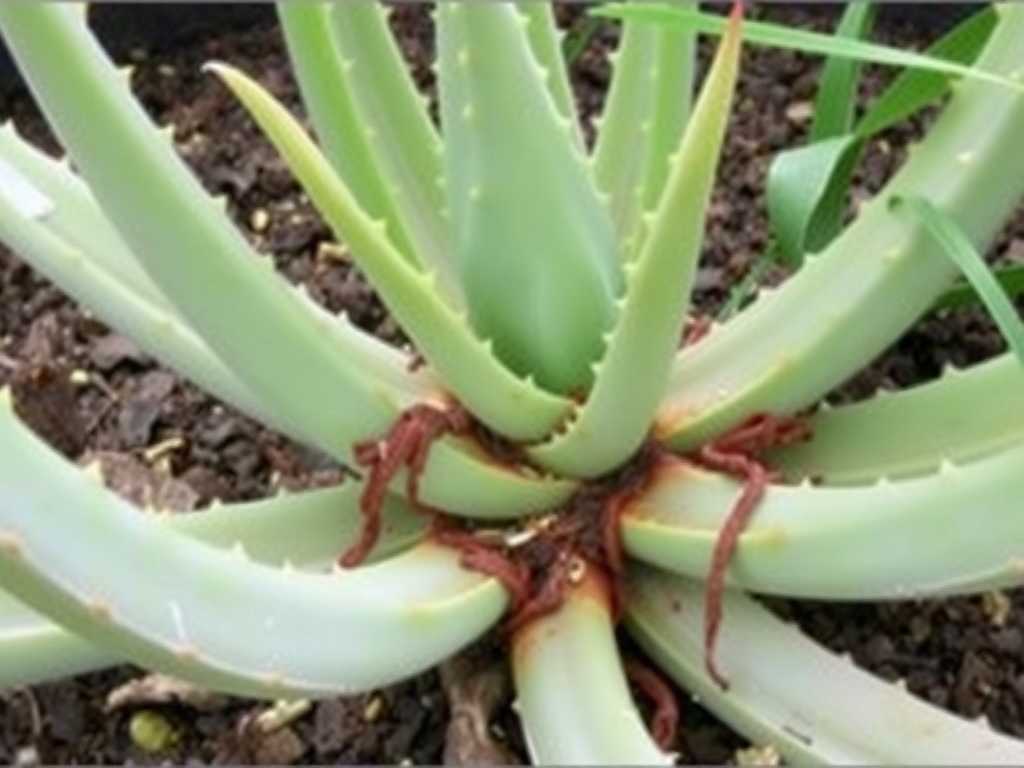
The Soil and Smell Test: If you suspect trouble, don't wait. Gently wiggle the plant at its base. Does it feel unstable, as if it's not anchored? That's a red flag. Next, do the smell test. Carefully remove the plant from its pot. Healthy roots have an earthy smell. Roots affected by rot will have a distinct, foul, musty, or sour odor—it's unmistakable. Visually, healthy roots are firm and light-colored. Rotting roots are dark brown or black, mushy, and may slough off in your hand.
Stunted Growth and Instability: In a growing season, if your aloe shows zero new growth or the new growth emerges stunted and weak, consider it a symptom. The plant is redirecting all energy to survival. Finally, if the entire plant is leaning or wobbling significantly in the pot, the structural roots are likely compromised.
My Two-Week Rescue Protocol: A Step-by-Step Journey
When I spotted the early signs on a large, mature aloe—softening lower leaves and a suspicious lean—I knew immediate action was needed. Here was my exact process.
Week 1: The Surgical Intervention
Day 1: Unpotting and Diagnosis. I gathered a clean workspace, new potting mix (a commercial cactus/succulent blend with extra perlite), a clean pot with drainage, sterilized scissors, and a fungicide. I tipped the pot and gently coaxed the plant out. The diagnosis was clear: about 40% of the root mass was dark, soggy, and emitted that sour smell. The core of the root ball was still firm, confirming early detection of root rot was key.
The Critical Step: Root Pruning. This is where you must be ruthless. I gently rinsed the root mass under lukewarm water to remove all old soil. With my sterilized scissors, I cut away every single dark, mushy root. I cut back until only firm, cream-colored tissue remained. Any soft, discolored material left behind will continue to decay. After pruning, I let the plant air-dry on a paper towel in a shaded, well-ventilated spot for 48 hours. This callusing is crucial to prevent new infections when repotted.
Day 3: Repotting and Initial Care. Once the cut ends had calloused, I prepared the new pot. I filled it one-third with my well-draining mix. I placed the aloe in, spreading the remaining healthy roots, and backfilled, ensuring the base of the stem was at the same level as before. I did not water it. The plant needed time to recover from the shock and for any tiny root wounds to seal. I placed it in bright, indirect light—no direct sun yet, as it was too vulnerable.
Days 4-7: Observation and Patience. This was a test of will. The plant looked a bit sad and wrinkled. This was normal! It was using stored water to heal. I resisted the overwhelming urge to water. I monitored the leaves daily for any spread of softness (thankfully, none). The key here was providing stability and light, not moisture.
Week 2: Recovery and Regrowth Signals
Days 8-10: The First Watering. After a full week post-repotting, I checked the soil. It was completely dry. I gave the plant a thorough, deep watering until water ran freely from the drainage hole, ensuring the entire root zone was moistened. Then, I let it drain completely. This first drink is a signal to the roots that it's time to grow.
Days 11-14: Monitoring for Stability. I kept the plant in its bright spot. The most significant change I observed was the halt in the leaf softening. The existing firm leaves remained firm. The slight wrinkling from dehydration began to smooth out very slowly. The plant stopped leaning and felt solidly anchored in its new pot. While no dramatic new growth appeared (it was focusing energy below the soil), the most important sign was there: the progression of rot had been completely arrested. The plant was stable.
The Pitfalls I've Encountered (And How to Avoid Them)
My journey hasn't been without missteps. Here are the common traps and how to sidestep them.
1. The "Just a Little Water" Trap: The biggest mistake is watering on a schedule. After repotting a rotted plant, the instinct is to keep the soil slightly moist to "help." This is a death sentence. Always let the soil dry out completely between waterings, and after root surgery, extend that dry period significantly.
2. Using Contaminated Tools or Soil: Early on, I once reused old potting soil "to save money" and didn't sterilize my shears. The rot came back aggressively. Now, I always use fresh, sterile mix and clean my tools with rubbing alcohol between every cut.
3. Insufficient Light During Recovery: A weakened aloe needs bright light to fuel recovery and new root growth, but direct hot sun can scorch it while it's vulnerable. Bright, indirect light for the first few weeks is the perfect balance.
4. Neglecting the Long-Term Environment: According to the American Horticultural Society (AHA), proper environmental control is as important as treatment. Saving the plant is only half the battle. I ensure my recovered aloes are in terracotta pots (which breathe), in a fast-draining mix, and only watered when the soil is dry and the leaves show slight thirst.
Your Questions, Answered
Can an aloe vera plant recover from root rot? Absolutely, if caught early. The success hinges on the percentage of healthy roots remaining after pruning. If you can preserve a significant portion of the root system or even the healthy stem base, the plant can regenerate new roots. My two-week case study shows that with early action, recovery is not just possible, but likely.
How do you distinguish between overwatering and underwatering? This is a classic confusion. Both can cause wilting or drooping. The key differentiator is leaf texture. Underwatered aloe leaves become thin, curled, and crispy-dry. They may wrinkle deeply. Overwatered aloe (leading to rot) leaves become soft, mushy, and waterlogged, often starting at the base. They feel heavy and sodden, not light and dry.
Should I use hydrogen peroxide or cinnamon on the roots? I've experimented with both. A diluted hydrogen peroxide soak (1 part 3% H2O2 to 4 parts water) can help oxygenate roots and kill surface pathogens after pruning—I used this in my protocol. Cinnamon is a mild natural fungicide; I sometimes dust the calloused roots with it before repotting as an extra precaution. However, neither is a substitute for surgical removal of all rotted tissue and proper cultural fixes.
Watching an aloe vera rebound from the brink is deeply rewarding. It teaches patience, observation, and respect for the plant's natural rhythms. The battle against aloe vera root rot is won not with constant intervention, but with informed vigilance. By learning its early language—the subtle softness, the slight discoloration, the telltale lean—you become not just a plant owner, but a true plant partner. Start by checking your aloe today; your proactive eye is its best defense.