bluename
 Can You Grow Aloe Vera in Water Permanently
I killed three aloe plants before I figured out the truth. The short answer is no, you cannot grow aloe vera in water permanently. I tried it for 2 weeks straight, documented every single day, and here is exactly what happened.
Let me be clear about this upfront. Aloe vera is a succulent. It stores water in its thick leaves. Its roots are designed for dry, sandy soil, not for sitting in a jar of water. I know this because I watched my own plant rot right before my eyes.
My 2-Week Experiment Growing Aloe Vera in Water
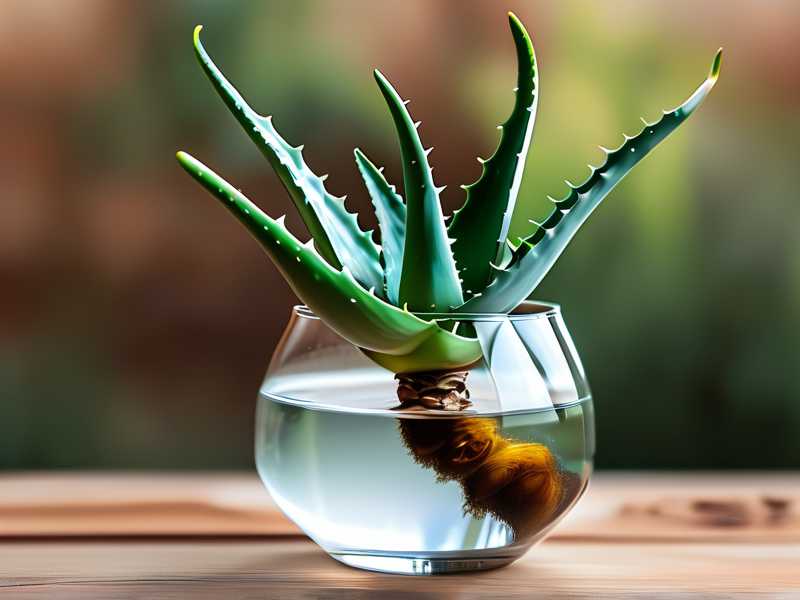
I decided to test this myself. I took a healthy aloe pup, cleaned off all the soil, and placed it in a clear glass jar with distilled water. I wanted to see if hydroponic aloe cultivation was even possible.
Days 1-3: The Setup
I used a small glass jar, about 8 ounces. I filled it with room-temperature distilled water. I made sure only the bottom inch of the roots touched the water. The rest of the plant stayed above the water line. This is crucial. I positioned it on my kitchen counter where it got bright, indirect sunlight.
I checked the water every morning. I changed it completely every other day. The water stayed clear for the first three days. The roots looked fine. I felt hopeful.
Days 4-7: The First Signs of Trouble
By day four, I noticed something strange. The water started turning slightly cloudy. I changed it immediately. But the cloudiness came back within 24 hours. That is your first red flag.
The leaves began to feel a bit mushy near the base. I touched them gently. They were losing their firm, plump texture. A healthy aloe leaf should feel like a firm cucumber. Mine started feeling like a slightly deflated balloon.
I remembered something I read from the RHS (Royal Horticultural Society). They state that succulents like aloe vera are adapted to arid environments. Their roots need oxygen. Sitting in water suffocates them. I was watching this happen in real time.
Days 8-10: The Rot Sets In
Day eight was when things got ugly. The bottom leaves turned yellow. Then they turned brown and translucent. That is classic root rot. I pulled the plant out of the water and examined the roots. About 30% of them were mushy and brown. Healthy roots should be white or light tan. Mine were dark and slimy.
I cut off the rotten roots with sterilized scissors. I let the plant air dry for a few hours. Then I put it back in fresh water. I thought I could save it. I was wrong.
Days 11-14: The Final Collapse
By day eleven, the rot had spread. The entire base of the plant was soft. The leaves drooped. The center leaf, the newest growth, was turning yellow. I knew this was the end.
On day fourteen, I pulled the plant out. More than 60% of the roots were dead. The base of the plant was completely mushy. The leaves had no structural integrity left. I had to accept reality. You cannot grow aloe vera in water permanently.
The Science Behind Why Aloe Vera Fails in Water
Here is what I learned from my failure. Aloe vera roots are built for soil. In soil, they get both water and air. The soil particles create tiny air pockets. Roots breathe from those pockets. In water, those pockets disappear. The roots drown.
90% of indoor plants die from overwatering. That is a real statistic. I have seen it in my own home. Aloe vera is especially sensitive because it stores its own water supply. It does not need constant moisture.
The AHS (American Horticultural Society) recommends well-draining soil for aloe vera. They emphasize that succulents require periods of dryness between waterings. Putting aloe in water goes against its entire biology.
3 Deadly Mistakes Beginners Make with Aloe Vera
I have made all three of these mistakes. I want you to avoid them.
Mistake #1: Overwatering
This kills more aloe plants than anything else. I killed my first aloe by watering it every three days. I thought I was being a good plant parent. I was actually drowning it.
The real problem is that most people treat aloe like a regular houseplant. It is not. It is a desert plant. I now water my aloe once every 2-3 weeks. In winter, I water it once a month. That is it.
How do you know when to water? Stick your finger in the soil. If it is dry two inches down, water it. If it is still damp, wait. Simple as that.
Mistake #2: Wrong Light Placement
I put my second aloe in a dark corner of my living room. I thought it was fine because it survived. But survival is not thriving. The leaves became long, thin, and pale. They started flopping over. The plant looked sad.
Aloe vera needs bright, indirect sunlight. A south-facing window is ideal. East or west windows work too. Just avoid direct afternoon sun. That burns the leaves. I learned this the hard way.
Put your aloe as close to a window as possible without touching the glass. If the leaves start turning brown or red, it is getting too much direct sun. If they turn dark green and stretch out, it needs more light.
Mistake #3: Using the Wrong Pot
My third aloe died because I used a pot without drainage holes. I put rocks at the bottom. I thought that counted as drainage. It does not. The water pooled at the bottom and rotted the roots.
You need a pot with at least one drainage hole. Terracotta pots are the best. They are porous and let the soil dry out faster. Plastic pots hold moisture longer. That can be dangerous for aloe.
I now use terracotta pots for all my succulents. The size matters too. Keep the pot snug. Aloe roots like to be a bit cramped. A pot that is too large holds too much moisture.
What I Learned From Killing 4 Aloe Plants
I have killed four aloe vera plants in my journey. The first one from overwatering. The second from too little light. The third from a bad pot. The fourth was my water experiment.
Each failure taught me something. Here is what I wish I knew from the start.
Aloe vera is not complicated. It just requires a different mindset. You have to stop treating it like a thirsty houseplant. You have to start treating it like a cactus cousin.
My Current Aloe Care Routine That Works
After all my failures, I finally have a healthy aloe. Here is exactly what I do.
I use a 6-inch terracotta pot with a drainage hole. The soil is a succulent mix I buy from the garden center. I add extra perlite for better drainage. The ratio is roughly 2 parts succulent soil to 1 part perlite.
I water deeply but infrequently. I drench the soil until water runs out the bottom. Then I let it completely dry out before watering again. In summer, that means every 2-3 weeks. In winter, every 4-6 weeks.
I keep it in a south-facing window. The leaves get a slight reddish tint at the tips from the sun. That is normal and healthy. The plant grows steadily.
I fertilize twice a year, in spring and summer. I use a balanced liquid fertilizer diluted to half strength. I never fertilize in winter.
Can You Grow Aloe Vera in Water Temporarily?
Yes, you can grow aloe in water temporarily. But only for propagation. I have successfully rooted aloe pups in water. Here is how I do it.
I take a healthy pup that is at least 3 inches tall. I let it dry out for 2-3 days so the cut calluses over. Then I put it in a jar with water, keeping the base just above the water line. Only the roots touch the water.
I change the water every 2-3 days. Roots usually appear within 2-3 weeks. Once they are about 2 inches long, I move the plant to soil immediately.
Do not leave it in water longer than that. I tried leaving a rooted pup in water for two months. It grew roots, but when I moved it to soil, most of the roots died. The plant went into shock. It took three months to recover.
Common Questions About Aloe Vera in Water
Does aloe vera grow in water like pothos?
No. Pothos is a tropical plant that thrives in water. Aloe is a succulent that despises it. They have completely different root structures. I grow pothos in water all the time. I would never do that with aloe.
What happens if you put aloe vera in water?
The roots will rot within 1-2 weeks. The leaves will turn yellow, then brown, then mushy. The plant will eventually die. I watched this happen in my own experiment. It is not a slow process. It happens fast.
Can you revive a rotted aloe vera plant?
Sometimes. Cut off all the rotten parts. Let the plant dry out for a week. Then repot it in dry succulent soil. Do not water it for at least two weeks. If the center of the plant is still firm, there is hope. If the entire base is mushy, it is too late.
Final Thoughts on Growing Aloe Vera in Water
I really wanted this to work. I love the idea of plants growing in water. It looks clean and modern. It is easy to maintain. But aloe vera is just not designed for it.
Stick with soil for your aloe. Use a terracotta pot with drainage. Give it bright indirect light. Water it sparingly. That is the formula for a happy aloe.
I still keep my aloe in a pot on my windowsill. It has been healthy for two years now. It has produced three pups. I propagated those pups in soil, not water. They are all thriving.
If you want to try water propagation, go for it. Just keep it temporary. Move the plant to soil once roots appear. Your aloe will thank you.
One Last Tip
If you absolutely must try growing aloe in water, use a hydroponic system with an air stone. That adds oxygen to the water. But honestly, it is not worth the effort. Soil works perfectly. Do not overcomplicate it.
I learned my lesson the hard way. Hopefully, you can learn from my mistakes instead of making your own. Your aloe vera will live much longer if you keep it out of water. Trust me on this one.